
LGBTQ+ Survivor Leader Spotlight: Cristian Eduardo

In celebration of Pride Month, we had the privilege of interviewing LGBTQ+ Survivor Leader Cristian Eduardo – a powerful advocate for the rights of survivors, immigrants, and 2SLGBTQ+ people. His reflections highlight the specific vulnerabilities faced by LGBTQ+ survivors while reminding us to stay strong in our resistance, advocacy, and pride.

In celebration of Pride Month, we had the privilege of interviewing LGBTQ+ Survivor Leader Cristian Eduardo – a powerful advocate for the rights of survivors, immigrants, and 2SLGBTQ+ people. His reflections highlight the specific vulnerabilities faced by LGBTQ+ survivors while reminding us to stay strong in our resistance, advocacy, and pride. This month, we honor him and all the LGBTQ+ survivors at the forefront of the fight for love that is inclusive, celebrated, and free from violence.

—-

My name is Cristian Eduardo, and I am a queer immigrant from Mexico. Since 2016, I’ve been an advocate for immigrant and 2SLGBTQ+ rights. As a person living with HIV, this experience has profoundly shaped my advocacy, fueling my fight against hate and stigma.

I am the co-founder of Mujeres en Resistencia, a coalition of immigrants dedicated to educating the immigrant and Spanish-speaking community about gender-based violence. We also connect victims and survivors with free and accessible resources.

I am honored to be a member of the U.S. Advisory Council on Human Trafficking. This presidentially appointed position provides a formal platform for trafficking survivors to advise and make recommendations on federal anti-trafficking policies to the President’s Interagency Task Force to Monitor and Combat Trafficking in Persons.

Additionally, I serve as the Secretary of the NYC HIV Planning Group. Our primary goal is to reduce the incidence of new HIV infections in New York City. The group is a collaborative effort of community and governmental representatives and agencies that work to inform the development and updates of a comprehensive Integrated HIV Prevention and Care Plan.

As an independent consultant, I partner with various non-profit organizations, community groups, and legislative stakeholders nationwide. I provide training and technical assistance at the intersection of human trafficking, immigration, survivor engagement, the 2SLGBTQ+ community, and trauma-informed practices.

I have received several accolades, including the 2021 Advocate of New York City from the New York City Office to End Gender Based Violence, the NJ Freedom Award 2023 by the New Jersey Coalition Against Human Trafficking, the Smith/Wellstone Award by the Global Center on Human Trafficking at Montclair State University, and the 2025 Liberator Award Survivor of the Year by the Liberator Awards, created by the SOAP Project.

Fun fact about me: I consider myself a nerd (I am also a former mechanical engineer) who loves reading about science, playing video games, and watching anime—these three are my ultimate form of self-care.

How does your queer identity give you strength?

As Michelle Obama wisely said, “Don’t dim your light to make others comfortable. Be proud of who you are and shine brightly.” Being queer often carries a heavy weight of stigma, hate, and discrimination. I’ve experienced these challenges firsthand throughout my life, even within my own family and workplaces.

However, the scars that hate and stigma have carved on my soul have become the fuel to keep fighting—not just to exist, but to fight for myself and the community I belong to.

I’m proud to be different; I’m proud to be me. I’ll continue advocating for 2SLGBTQ+ rights because I don’t want any of my queer brothers, sisters, and siblings to feel alone or rejected.

I know what it feels like to experience that, and I’ve chosen to resist, fight, and continue to light the path for liberation, just as my queer ancestors did for me.

As an LGBTQ+ survivor, what does resistance mean to you?

Resistance, to me, means breaking the status quo.

Gender, sexuality, and gender expression are not binary concepts but rather a multidimensional spectrum that allows me to embrace my authentic self without needing to justify my existence.

For a 2SLGBTQ+ survivor, resistance entails dismantling the exotification, commodification, and normalization of exploitative systems (such as prostitution) that are designed for the pleasure and profit of those who strip away our humanity. Queer survivors, we deserve more than mere survival; we deserve to thrive.

How do you see queer survivors’ place within the broader movement?

Queer survivors have always stood at the forefront of the battle against gender-based violence.

Our lived experiences reveal how criminalization for existing, the stigma attached to our identities, and the pervasive hate directed at our community significantly heighten the risk of victimization.

This understanding has always compelled us to amplify our voices, ensuring that those on the margins are prioritized when developing solutions.

The voices of queer survivors must be integrated—not simply as a box to tick for inclusion, but as an indispensable core element in the comprehensive fight to eradicate exploitation, abuse, and violence. We are not solely advocating for the rights of our queer siblings; we are, as Marsha P. Johnson so eloquently stated, “fighting for the right of all humanity: ‘No pride for some of us without liberation for all of us.'”

What are the pressing issues impacting LGBTQ+ survivors today?

It’s crucial to recognize that gender-based violence impacts more than just heterosexual and cisgender individuals.

Queer survivors exist, yet we are frequently silenced and dismissed because we do not conform to conventional definitions.

Access to safe and inclusive services for queer survivors is almost non-existent. This alarming scarcity often compels queer victims and survivors to return to their perpetrators or abusive environments. It further reinforces the narrative that our experiences of abuse and violence are insufficient for systems, services, and providers to acknowledge our fundamental humanity.

What resources would you like to see to better support LGBTQ+ survivors?

Trauma-informed approaches are essential when working with victims and survivors who identify as 2SLGBTQ+.

We must address the intersectionality of discrimination, hate, and stigma that queer survivors face when accessing services.

It’s crucial to train and educate all staff and service providers about gender, sexuality, gender expression, biases, stigma, and discrimination.

Queer survivors exist, and hate combined with a lack of accurate information is pushing us toward suicide, exploitation, and abusive relationships.

It’s vital to develop guidelines ensuring that services are provided regardless of how individuals, specifically queer victims and survivors, self-identify. It’s important to highlight that queer individuals are overrepresented in the sex trade. Even if individuals use terminology that might make service providers uncomfortable or feel challenged, the fundamental need for housing, affirming care, economic empowerment, legal, and immigration services remains.

Survivor Leader Spotlight: W.Y.

“I encourage survivors to try however they can to create and make space for a self-care/healing practice because it can only be empowering.”

This Domestic Violence Awareness Month (DVAM), we’re spotlighting some of our incredible Survivor Leaders, former clients of Sanctuary who go through a 12-week training and certification course to prepare them to make system-wide change through advocacy, training, program development, and working directly with other survivors. 


Having a self-care practice while I was liberating myself from DV has been essential in my sanity, and the success of my and my child’s outcome. I often asked myself why didn’t I have this in place sooner, especially when I was still in the relationship with the abuser. It’s not until I had distance from him and the situation that I understood that I was in daily survival mode — there was no space to cultivate my stillness, awareness, and inner strength.  The following practices have not just helped me, but have really made all the difference, in who I am today. I can say that I’ve transcended the victim and survivor phases of trauma, and am now thriving.  I hope every person who has been a victim of any form of DV gets to this place within themselves and in their lives because they deserve to.

After being in survival mode for years, having my sympathetic nervous system activated non-stop, my nervous system needed a huge rest.  Any practice that revolves around stillness or slow-pace and body/mind awareness will help regulate the nervous system. For me, it was meditation.  Having at least 2 hours to myself daily to be still was essential. I meditated anywhere from 1-2 hours, for almost 2 years straight.  I never set a timer..I just got up when I was ready. I also experienced that “witnessing” during meditation that I’ve heard about from serious meditators and monks.  This was truly healing as I was able to view matters and people (including the abuser) from a higher, detached perspective.  The majority of my emotional healing has come from my meditation experiences. These sessions brought understanding and compassion to my life in extremely profound ways…in essence enlightenment.  I also allowed (and still do) myself to sleep-in whenever possible, and to have lazy-days.  If sleeping-in isn’t an option, then I get to bed super early like 8pm to get 10-12+ hours of sleep.  Your nervous system and entire body is healing during this time.  

The other practice is something that allows recording of reflections, and emptying of thoughts and feelings. I journaled as much as possible.  It’s a way to dump out raw thoughts and feelings to get out of my system without directing that energy onto anyone else. It’s also a great tool for reflecting. Journaling allows me to look back at entries to see how far I’ve come in my healing journey. I tend to also sleep better when I journal before bed. It’s a space to free up my mental and not take things into my sleep. I used to use notebooks, but that fills up quickly and where does one put tens of dozens of notebooks?! An app like Evernote or Apple Notes is great because it’s automatically dated, and you can search for key words or dates whenever you want to look back at older entries.  If journaling might not be your thing, recording voice notes is a great alternative.
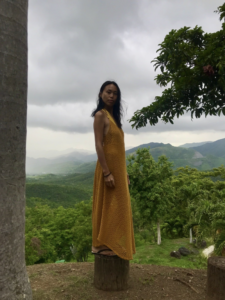
“I can say that I’ve transcended the victim and survivor phases of trauma, and am now thriving. I hope every person who has been a victim of any form of DV gets to this place within themselves and in their lives because they deserve to.”

Both journaling and meditation are something I’ve done prior to experiencing DV, so it felt natural to use familiar tools — although there are numerous other practices that can offer the same support. And although I did these things intensely during this time period, I don’t at the moment need to sit daily nor for that length of time. I’m in a better place internally and externally, and am grateful that the biggest to smallest things were aligned for me to have and experience these practices during a critical time in my life; most especially throughout the family court case.  

The last thing I’d like to share isn’t a healing practice, although it may provide some relief with further abuse. While the custody and DV case was in family court, I wish I would’ve requested that any communication required with the abuser pertaining to our child be thru a communication app.  There are apps like OurFamilyWizard and TalkingParents that are created for this type of communication. Whereas text messages/emails can get a little tricky to gather and present as evidence, these apps don’t allow deletion or changes to the messages exchanged, so there can’t be any manipulation of context, and are widely accepted by courts as admissible evidence. I only found out about this years into the court case and didn’t occur to me then to request this even for the temporary OOP. The OOP petitioner may request communication clauses in an OOP, which I did since overnight visitations were granted between my child and the abuser. And he did abuse that access to me.  Since we now use the app, his written interactions with me have calmed down a lot because he knows this could be unquestionable admissible evidence.

Every person’s situation is different, and I recognize I had a certain privilege to be able to do have this type of time and physical space, but I encourage survivors to try however they can to create and make space for a self-care/healing practice because it can only be empowering. 


Join W.Y. in standing with survivors of gender violence. Your gift supports Sanctuary’s life-saving work with thousands of families escaping abuse.
   Make a Gift  

Survivor Leader Spotlight: Jessica Muñoz

“The bittersweet thing about intimate partner violence is that it cuts across all cultures, and the sweet thing is survivor leadership brings people together from all identities.”

This Domestic Violence Awareness Month (DVAM), we’re spotlighting some of our incredible Survivor Leaders, former clients of Sanctuary who go through a 12-week training and certification course to prepare them to make system-wide change through advocacy, training, program development, and working directly with other survivors. 


Fellow Survivor Leader Jennifer Cortes sat down with Jessica to discuss her advocacy work and more. 

Survivor leadership is an essential aspect of Sanctuary’s work. Can you describe how survivor-led initiatives or programs have made a difference in the fight against domestic violence?

Survivor leadership is essentially valuing lived experience. Lived experience of gender-based violence is cultural expertise. Identifying as a survivor is part of my cultural identity. Furthermore, there are nuances to the survivor’s cultural identity that add vital expertise, for example being a first-generation immigrant, or an Afro-Latina. Gender identity can add to cultural expertise. Cultural identity is a complex thing: I am a first-generation immigrant who spent all of my adult years in West Harlem in little Santo Domingo far away from my home country’s culture. Cultural identity moves beyond race and country of origin. The bittersweet thing about intimate partner violence is that it cuts across all cultures, and the sweet thing is survivor leadership brings people together from all identities.

Survivor leadership harnesses lived experience and cultural expertise to make systemic change. Systemic change happens by giving survivors voices and telling them “you belong here”. That means recognition and remuneration of lived experience. This has been happening for years in substance abuse circles, where peer leadership has long been the norm and part of the treatment team. Trauma-informed care has not embraced peer leadership, and this needs to change. Stigmatization of survivors sadly remains strong. Survivors are not forever damaged. In fact, we have unique and transferable skills. Making space for us at the table alongside organizational leaders, board members, and decision makers is vital.

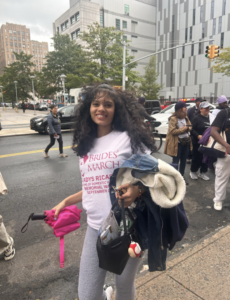
As survivor leaders at Sanctuary we pride ourselves on being present on the ground at grass roots events such as Brides March. We are inside the shelters face to face with survivors, inside courts supporting survivors. But, we are also in meetings discussing policy with board members who are hospital leaders, partners in big law, former judges, foundations, staff attorneys, and much more.

“The bittersweet thing about intimate partner violence is that it cuts across all cultures, and the sweet thing is survivor leadership brings people together from all identities.”

Can you tell me about some recent advocacy work you’ve been involved in, and which moments have been the most impactful to you?

Speaking at Denim Day in Foley Square was powerful for me. I discussed sexual assault in the setting of intimate partner violence, and I experienced the privilege so many are denied: being given a voice and feeling like my story matters. There are so many hidden stories out there and no one survivor story is more important than another.

How has your experience as a survivor influenced your approach to supporting others who have experienced gender violence?

There are not enough days in the week. Never enough time. That is why survivor leadership needs to be financially compensated so it may remain sustainable. Domestic violence is an everyone problem, not a survivor problem. Survivors are already weighed down by the retraumatization of going through systems. We need your support.

In your opinion, what are some of the most significant barriers or misconceptions that still exist when it comes to addressing domestic violence?

I am disheartened by some of the #narcissticabuse content I see on my social media feed recently. Some of the accounts are ran by “recovering narcissistic abusers”offering their past lives as abusers to school people. Or there are opportunists out there looking to make a buck from content on coercive control. They are predators with neither lived experience nor professional expertise in my opinion. I want to bring the conversation back to what is at the center of abuse and that is coercive control. Narcissism is in fact a difficult to diagnose personality disorder. When we focus on narcissistic traits, we move away from what is at the center of gender-based violence, and that is CONTROL. Additionally, I want to alert everyone that the best resource for dealing with intimate partner violence is a multidisciplinary organization that offers free services from a team of experts in the field. An example of this is Sanctuary for Families where there are family law attorneys, immigration attorneys, attorneys specializing in matrimonial law, and mental health therapists all of whom are licensed professionals. We also have a shelter and of course survivor leaders who are advocates. These are the real people doing the real work, who will tell it like it is and provide menu options to build a pathway to safety.

What are some ways that people can get involved or support survivors throughout DVAM and beyond?

Follow Sanctuary for Families on IG (@sffny)! Give the not-for-profits who have been doing the real work support. The mere act of following can help increase their online presence, which can contribute to their fundraising efforts. Follow #DVAM hashtags and post, talk and discuss coercive control/ domestic violence. Let’s remember to talk about the emotional and psychological abuse, not just the physical abuse. In my experience, emotional and psychological abuse leaves the deepest scars.

Is there a particular message or call to action you’d like to convey in honor of DVAM?

I want to draw attention to an awesome program I’ve been privileged to be part of as a survivor leader: trauma informed strength training, with Strength is MINE. Check them out on IG (@infostrengthismine).

Engaging in weightlifting within the traditionally masculine gym environment is a deeply ingrained and celebrated societal practice. In a landscape where patriarchy forms the foundational backdrop of gender-based violence, the powerful act of a survivor stepping into a gym, asserting their presence, and witnessing fellow gym-goers willingly adjust to accommodate their needs conveys a resounding message: “I belong here.” This experience holds immeasurable importance for oppressed survivors of gender violence. Furthermore, it is imperative to acknowledge that gender-based violence is a societal issue that extends far beyond the burden placed upon survivors; it is a pervasive problem that implicates everyone. Implementing trauma-informed therapies within commonplace community settings, such as fitness facilities, offers an appealing and easily accessible approach. The inclusion of survivor healing within everyday spaces, alongside the broader community, contributes to destigmatizing the survivor experience. Depicting survivors as exemplars of strength serves as a poignant reminder of their transformation from individuals previously perceived as damaged. This influences both survivors’ self-perception and the broader societal perspective.

I have particularly enjoyed my relationship with my strength-training coach (@ironstrongfit), who is a mentor: her energy personifies empowerment and kindness. For an hour I am fully present and connected with my body while feeling psychologically and physically safe. This is extremely powerful for me and has been equally as profound as attending talk therapy, if not more. I also want to shout out Ediva owner and instructor at GRIT boxing who has delivered trauma-informed boxing classes. We loved boxing with Ediva. Providing a trauma-informed space for survivors to experience a somatic intervention that addresses body connectedness is everything!

Support funding for further research to consolidate somatic interventions as primary therapies. Follow me on IG (@jmunozpsychotherapy) to learn more.

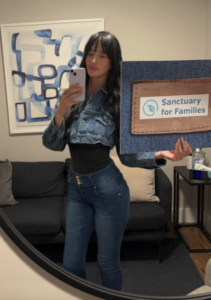
Jessica with her strength-training coach

Join Jessica in standing with survivors of gender violence. Your gift supports Sanctuary’s life-saving work with thousands of families escaping abuse.

   Make a Gift  

Survivor Leader Spotlight: Jennifer Cortes

“We all give each other strength and support, and when we work together, we make change happen through our pain.”

This Domestic Violence Awareness Month (DVAM), we’re spotlighting some of our incredible Survivor Leaders, former clients of Sanctuary who go through a 12-week training and certification course to prepare them to make system-wide change through advocacy, training, program development, and working directly with other survivors. 


Fellow Survivor Leader Jessica Muñoz sat down with Jennifer to discuss her advocacy work and more. 

Can you tell me about some recent advocacy work you’ve been involved in, and which moments have been the most impactful to you?

The recent advocacy work I have been a part of was the FBI Employee Mental Health Fair and Brides March. The moments that have been most impactful to me were when I was in the fair, and I was educating a lady on Mental Health and learned that she wanted to give back to the community with her beauty services. I was a bit shocked because that’s one of the projects I was working on, and this was definitely an opportunity to work together to offer as much as possible to the community.

Another moment was in the Brides March when the family of the woman whom the March was dedicated to was speaking on how one should be able to leave a situation and not have it follow them. These words sent chills down my spine because it’s very true and it reminded me of my personal experience and what many survivors go through today.

Jennifer at the 2023 Brides March

Tell me about a time you felt beautiful? Can you link this to a moment in your healing and compare it to a time you did not feel beautiful?

When I was 15, I was in the Mac store with my mother, after school shopping. I was getting a makeover and when I looked in the mirror my self-esteem immediately rose and I felt so beautiful. I didn’t feel scared anymore to go to high school and deal with bullying. It felt like a shield like I can face anything. Before this moment, I always felt subconscious about myself because of the bullying I would go through in middle school. Now till this day I use beauty as a way to take my power back and reinvent myself.

 You work in the beauty industry. Do you think the beauty salon is a good environment to discuss intimate partner violence?

I think it is because beauty is a form of healing. If you have a beauty professional that you trust it can be a moment to open up and the beauty professional could seek resources to give. Beauty professionals often see signs of abuse with marks on the body and missing spots of hair. It would be better if all beauty professionals got trained on domestic violence and how to handle it in a matter that keeps the clients, the staff and the salon safe.

Check out Jennifer’s beauty business on Instagram at @lashodite

Do you like the idea of bringing advocacy to the beauty salon, and in your opinion, what is the best way to connect with someone? Just to begin a conversation and let the client talk as you do their lashes? How do you make someone feel comfortable talking to you?

Yes, I like the idea of advocacy in a beauty salon. The best way to connect with someone is making them feel comfortable first by asking them about their day and if they are comfortable in the chair and then giving them the space to ask you questions and talk about what’s on their mind. I always smile and be kind. I believe that clients read my energy and feel safe around me.

As a bilingual Latina woman can you tell me what we should be doing to reach our Spanish speakers in this city and let them know about options they have to overcome gender-based violence?

I think it’s important to team up with Spanish-speaking advocates who can share the resources that are needed for domestic violence and translate any resources that are not in Spanish (internet resources).

“La violencia de género es muy serio. Estoy en contra y creo que es importante educar a todos sobre las señales, la historia, los daños que causa y los recursos disponibles.”

Has your identity as Puerto Rican woman affected how you might approach advocacy work? Do you think we’ve missed anything concerning catering to our Latine survivors?

It has affected me a bit because I know sometimes I try to give resources and sometimes the women are culturally house wives who are rarely alone so I have to do it in a moment when their significant other steps out or is busy. Sometimes they feel stuck because they have lived most of their lives with their significant other and make decisions with them. The best thing to do is have them memorize the number of the domestic violence hotline in an easy way at a safe time.

Overall in your option, what do people get wrong or think wrong when it comes to domestic violence?

People often believe that men do not get abused and that people choose their situation. Men have feelings and deserve respect. Education on domestic violence empowers you to see manipulation and abuse and allows you to seek help.

Have you enjoyed the experience of being a survivor leader and connecting with other survivor leaders? I ask this because I have so enjoyed going to advocacy events with you and getting to know you. 

I have enjoyed my experience and I know I will continue to enjoy it. I feel that my presence and the presence of my group have allowed us to educate and spread awareness. It has also allowed us to become stronger as one because we all give each other strength and support and when we work together we make change happen through our pain.

I really admired your writing in the narrative therapy workshop we did together as survivor leaders, can you tell me a little more about that experience and how it felt for you?

Narrative therapy helped me be more aware of how I perceive other people’s quotes and art and helped me be more open minded. Also, it showed me where I needed a bit more work and where I have healed.


Join Jennifer in standing with survivors of gender violence. Your gift supports Sanctuary’s life-saving work with thousands of families escaping abuse.
   Make a Gift