
Domestic Violence Is Not ‘a Little Fight’

President Trump recently dismissed domestic violence as “a little fight with the wife,” suggesting that offenses “that take place in the home” should not be counted as crimes. This attempt to minimize domestic violence is dangerous and uninformed.

On Monday, President Trump stood at the Museum of the Bible in Washington and dismissed domestic violence as “a little fight with the wife,” suggesting that offenses “that take place in the home” should not be counted as crimes.

Rather than walking back this dangerous statement, the White House doubled down the next day. During a press briefing, White House Press Secretary Karoline Leavitt claimed: “He wasn’t referring to crime. That’s exactly the point he was making. The president is saying, in fact, is that these crimes will be made up and reported as a crime to undermine the great work that the federal task force is doing to reduce crime in Washington, D.C.

These attempts to minimize domestic violence are dangerous and uninformed.

For far too long, domestic violence was treated as a private matter, kept behind closed doors, ignored by law enforcement, and excused by society. That silence left survivors — mostly women and children — without protection, justice, or support.

At Sanctuary for Families, we recognize domestic violence for what it is: both a crime and a public health crisis. Every year in the United States, more than 12 million people are victims of rape, physical violence or stalking by an intimate partner. This reality demands societal attention and a public response.

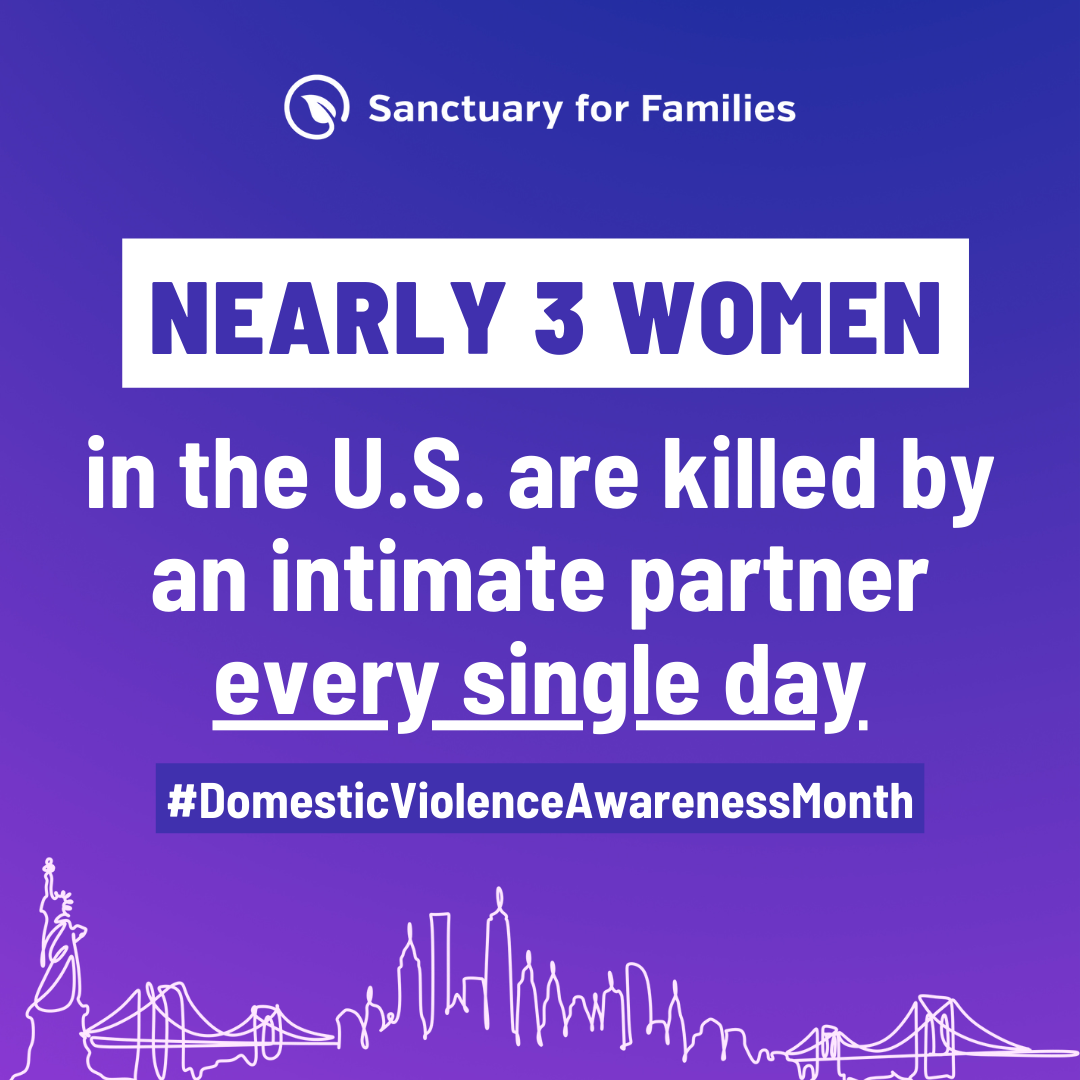
The stakes could not be clearer. Studies suggest that in the United States, more than half of female homicides are perpetrated by a current or former intimate partner. This type of violence — also known as femicide — is the most extreme consequence of a society that still struggles to take domestic abuse seriously.

Every day at Sanctuary, we work alongside survivors to ensure they are believed, protected, and supported as they rebuild their lives following abuse.

When someone in a position of great power speaks about abuse in such dismissive terms, it emboldens abusers, denies the very real suffering of survivors, and chips away at hard-won progress toward building a system that responds to survivors’ needs.

We believe that those in positions of leadership have a responsibility to speak truthfully and with care.

Domestic violence is not “a little fight.” It is a matter of life and death.

Words matter.

###

Media inquiries: press@sffny.org

Sanctuary Advocates on Behalf of Trafficking Survivors at the UN

In June, Sanctuary’s Director of the Anti-Trafficking Initiative, Jessica-Wind Abolafia, spoke at a UN multi-stakeholder hearing on the Global Plan of Action to Combat Trafficking in Persons. Drawing from over a decade of representing trafficking survivors, Jessica called on member states to confront the misogyny and racism embedded in the commercial sex trade — and to address the demand that fuels it.

This summer, Sanctuary’s Director of the Anti-Trafficking Initiative, Jessica-Wind Abolafia, spoke at a UN multi-stakeholder hearing on the Global Plan of Action to Combat Trafficking in Persons. Drawing from over a decade of representing trafficking survivors, Jessica called on member states to confront the misogyny and racism embedded in the commercial sex trade — and to address the demand that fuels it.

Watch a recording of Jessica’s speech and read her full remarks below.


Thank you, Madamme Chair and UNODC. Good Morning, Excellencies, Distinguished Guests, and Colleagues.

My name is Jessica Abolafia. I am honored to speak before you on behalf of Sanctuary for Families, New York’s largest provider of services to survivors of gender based violence. As Director of Sanctuary’s Anti-Trafficking Initiative, I oversee attorneys, case managers and clinicians who exclusively serve trafficking survivors. For over a decade, I have personally had the privilege of providing direct legal representation to thousands of trafficking survivors and their families.

Outside these walls, on the ground, day after day, I hear my clients’ stories; of survival and extraordinary resilience. My clients do not want pity nor saving. They want to heal, they want to be heard. Not just of being sold, but of being purchased. When my clients disclose it is not just about surviving pimps and traffickers, but the extensive victimization of the men who purchase them for sex. Violent, dehumanizing, and indifferent to consent. The list of harms inflicted by sex buyers on our clients are long – rape, torture, burns, broken bones, strangulation, Femicide. The resulting physical and emotional impacts, such as traumatic brain injury, chronic reproductive maladies, and trauma are profound and often life-long.

Article 9.5 of the Palermo Protocol directs member states to “discourage the demand that fosters all forms of exploitation of persons, especially women and children, that leads to trafficking.”

Sex buyers are the market force that fuel the multibillion dollar business of buying and selling women and girls, who are mostly of color.

When a survivor relays being sold over and over again 10, 20, 30, 50 times in a day, why is it that we so comfortably ask who is selling but not who is buying? We speak about push factors and victim vulnerability but dampen or rid our remarks of the person with the money, the power the privilege: the buyer.

This is not moralism, it is misogyny.

It is racism. Black, Brown and Indigenous women are disproportionately represented in the commercial sex trade.

Article 5 of CEDAW calls on state parties to achieve the elimination of prejudices based on perceived inferiority of women or stereotyped roles of men and women.

This means directly addressing the very cultural pillars – the pervasive subjugation – on which the buying and selling of women and girls is at very least permitted, in some cases, even sanctioned.

I respectfully urge member states to address the demand for commercial sex, for without the buyers, there would not be stories of sex trafficking to tell.

Thank you.

LGBTQ+ Survivor Leader Spotlight: Cristian Eduardo

In celebration of Pride Month, we had the privilege of interviewing LGBTQ+ Survivor Leader Cristian Eduardo – a powerful advocate for the rights of survivors, immigrants, and 2SLGBTQ+ people. His reflections highlight the specific vulnerabilities faced by LGBTQ+ survivors while reminding us to stay strong in our resistance, advocacy, and pride.

In celebration of Pride Month, we had the privilege of interviewing LGBTQ+ Survivor Leader Cristian Eduardo – a powerful advocate for the rights of survivors, immigrants, and 2SLGBTQ+ people. His reflections highlight the specific vulnerabilities faced by LGBTQ+ survivors while reminding us to stay strong in our resistance, advocacy, and pride. This month, we honor him and all the LGBTQ+ survivors at the forefront of the fight for love that is inclusive, celebrated, and free from violence.

—-

My name is Cristian Eduardo, and I am a queer immigrant from Mexico. Since 2016, I’ve been an advocate for immigrant and 2SLGBTQ+ rights. As a person living with HIV, this experience has profoundly shaped my advocacy, fueling my fight against hate and stigma.

I am the co-founder of Mujeres en Resistencia, a coalition of immigrants dedicated to educating the immigrant and Spanish-speaking community about gender-based violence. We also connect victims and survivors with free and accessible resources.

I am honored to be a member of the U.S. Advisory Council on Human Trafficking. This presidentially appointed position provides a formal platform for trafficking survivors to advise and make recommendations on federal anti-trafficking policies to the President’s Interagency Task Force to Monitor and Combat Trafficking in Persons.

Additionally, I serve as the Secretary of the NYC HIV Planning Group. Our primary goal is to reduce the incidence of new HIV infections in New York City. The group is a collaborative effort of community and governmental representatives and agencies that work to inform the development and updates of a comprehensive Integrated HIV Prevention and Care Plan.

As an independent consultant, I partner with various non-profit organizations, community groups, and legislative stakeholders nationwide. I provide training and technical assistance at the intersection of human trafficking, immigration, survivor engagement, the 2SLGBTQ+ community, and trauma-informed practices.

I have received several accolades, including the 2021 Advocate of New York City from the New York City Office to End Gender Based Violence, the NJ Freedom Award 2023 by the New Jersey Coalition Against Human Trafficking, the Smith/Wellstone Award by the Global Center on Human Trafficking at Montclair State University, and the 2025 Liberator Award Survivor of the Year by the Liberator Awards, created by the SOAP Project.

Fun fact about me: I consider myself a nerd (I am also a former mechanical engineer) who loves reading about science, playing video games, and watching anime—these three are my ultimate form of self-care.

How does your queer identity give you strength?

As Michelle Obama wisely said, “Don’t dim your light to make others comfortable. Be proud of who you are and shine brightly.” Being queer often carries a heavy weight of stigma, hate, and discrimination. I’ve experienced these challenges firsthand throughout my life, even within my own family and workplaces.

However, the scars that hate and stigma have carved on my soul have become the fuel to keep fighting—not just to exist, but to fight for myself and the community I belong to.

I’m proud to be different; I’m proud to be me. I’ll continue advocating for 2SLGBTQ+ rights because I don’t want any of my queer brothers, sisters, and siblings to feel alone or rejected.

I know what it feels like to experience that, and I’ve chosen to resist, fight, and continue to light the path for liberation, just as my queer ancestors did for me.

As an LGBTQ+ survivor, what does resistance mean to you?

Resistance, to me, means breaking the status quo.

Gender, sexuality, and gender expression are not binary concepts but rather a multidimensional spectrum that allows me to embrace my authentic self without needing to justify my existence.

For a 2SLGBTQ+ survivor, resistance entails dismantling the exotification, commodification, and normalization of exploitative systems (such as prostitution) that are designed for the pleasure and profit of those who strip away our humanity. Queer survivors, we deserve more than mere survival; we deserve to thrive.

How do you see queer survivors’ place within the broader movement?

Queer survivors have always stood at the forefront of the battle against gender-based violence.

Our lived experiences reveal how criminalization for existing, the stigma attached to our identities, and the pervasive hate directed at our community significantly heighten the risk of victimization.

This understanding has always compelled us to amplify our voices, ensuring that those on the margins are prioritized when developing solutions.

The voices of queer survivors must be integrated—not simply as a box to tick for inclusion, but as an indispensable core element in the comprehensive fight to eradicate exploitation, abuse, and violence. We are not solely advocating for the rights of our queer siblings; we are, as Marsha P. Johnson so eloquently stated, “fighting for the right of all humanity: ‘No pride for some of us without liberation for all of us.'”

What are the pressing issues impacting LGBTQ+ survivors today?

It’s crucial to recognize that gender-based violence impacts more than just heterosexual and cisgender individuals.

Queer survivors exist, yet we are frequently silenced and dismissed because we do not conform to conventional definitions.

Access to safe and inclusive services for queer survivors is almost non-existent. This alarming scarcity often compels queer victims and survivors to return to their perpetrators or abusive environments. It further reinforces the narrative that our experiences of abuse and violence are insufficient for systems, services, and providers to acknowledge our fundamental humanity.

What resources would you like to see to better support LGBTQ+ survivors?

Trauma-informed approaches are essential when working with victims and survivors who identify as 2SLGBTQ+.

We must address the intersectionality of discrimination, hate, and stigma that queer survivors face when accessing services.

It’s crucial to train and educate all staff and service providers about gender, sexuality, gender expression, biases, stigma, and discrimination.

Queer survivors exist, and hate combined with a lack of accurate information is pushing us toward suicide, exploitation, and abusive relationships.

It’s vital to develop guidelines ensuring that services are provided regardless of how individuals, specifically queer victims and survivors, self-identify. It’s important to highlight that queer individuals are overrepresented in the sex trade. Even if individuals use terminology that might make service providers uncomfortable or feel challenged, the fundamental need for housing, affirming care, economic empowerment, legal, and immigration services remains.

Silencing Survivors: DARVO, Misogyny, and the Myth of the Perfect Victim

When news broke that Blake Lively filed a formal sexual harassment complaint against Justin Baldoni, the online backlash was swift and predictable. These online hate campaigns reveal just how deeply entrenched societal biases against survivors still are.

Yet again, a woman who spoke out about harassment and abuse has been vilified by the internet.

When news broke that Blake Lively filed a formal sexual harassment complaint against Justin Baldoni, the online backlash was swift and predictable. The public’s response mirrors what we saw after Amber Heard spoke publicly about Johnny Depp’s abuse and Megan Thee Stallion was shot by Tory Lanez. Each time, instead of empathy or support, survivors were met with doubt, mockery, and cruelty.

These online hate campaigns reveal just how deeply entrenched societal biases against survivors still are.

The Myth of the Perfect Victim

The “perfect victim” is a dangerous, unrealistic standard that society imposes on survivors of abuse. According to this myth, victims must be likable, virtuous, and irreproachable. The perfect victim is weak and vulnerable. They must be involved in a ‘respectable’ activity at the time of victimization. Their aggressor must be someone they didn’t know, and who society deems guilty. The perfect victim is always white, cisgender, and feminine.

Survivors who deviate from these narrow expectations are treated with suspicion, contempt, or outright hostility. And because nearly no one fits the mold, it becomes all but impossible to be seen as a “legitimate” victim.

While Blake Lively holds the status of a wealthy, feminine, white woman, her claims were still dismissed by the public immediately. Lively’s character was scrutinized, being labeled “annoying” and “disingenuous.” Baldoni’s legal complaint focused on portraying her as “difficult” on set and his team released texts showing a friendly rapport during the early stages of filming — as if any of that disproves her harassment claims.

This is exactly the point: survivors are often disqualified from being believed not because of facts, but because of who they are perceived to be.

DARVO: Deny, Attack, Reverse Victim and Offender

Perpetrators of abuse often use a manipulation tactic called DARVO — Deny, Attack, Reverse Victim and Offender. Coined by psychologist Jennifer Freyd, DARVO describes what happens when an abuser denies wrongdoing, attacks the survivor’s credibility, and then portrays themselves as the true victim.

In celebrity cases, DARVO plays out on a massive scale. It becomes a public relations strategy. The abuser’s team weaponizes media narratives to disorient and silence the survivor, framing her as vindictive, unstable, or attention-seeking.

Amber Heard’s trial is one of the clearest examples. Despite credible evidence that she experienced domestic violence, the public overwhelmingly rallied around Johnny Depp, convinced he was the real victim. While the legal outcome was mixed, many interpreted it as a full vindication of Depp — and used it to justify relentless attacks on Heard. But the damage didn’t stop at the courtroom. The online backlash was brutal, far-reaching, and deeply discouraging. It sent a clear message to survivors everywhere: if you speak out, you’ll be mocked, maligned, and punished.

Blake Lively has been subjected to a similar pattern. Baldoni’s lawsuit centered on counter-allegations that had little to do with her sexual harassment claims. He framed himself as the victim, alleging that Lively and her husband used their fame to control production and harm his reputation. Almost immediately, a wave of negative coverage followed, portraying Lively as a serial “bully” who targeted costars and controlled the narrative. Whether this was an organic response or a coordinated campaign is unclear, but the timing and tone strongly suggest an attempt to flip the script.

The same happened to Megan Thee Stallion, who was mocked and discredited even after her abuser was convicted. In one of the most glaring examples, Drake rapped: “This b**** lie ’bout getting shots, but she still a stallion.” It’s a stark reminder that Black women’s trauma is too often trivialized, their credibility discounted.

Read more about why Black women are more likely to be victims of sexual assault here and why they are less likely to be believed here.

Why This Matters

DARVO and the myth of the perfect victim prime us to disbelieve survivors. They frame disclosures of abuse as opportunistic, hysterical, or manipulative. They redirect our attention away from the harm done—and onto the supposed flaws of the person who dared to speak out.

These public smear campaigns don’t just harm individual survivors. They send a message to anyone thinking of coming forward: don’t bother. If someone with Blake Lively’s platform and credibility is met with scorn, what hope does an everyday survivor have?

And when friends and family share memes or engage in cruel commentary, the damage deepens. Survivors internalize the backlash. They learn to stay silent.

Moving Forward

In the years since Amber Heard and Megan Thee Stallion’s cases, there has been some public reflection and regret. Hopefully, now that Baldoni’s retaliatory lawsuit has been dismissed in court, there will be similar reconsideration of how we treat survivors in the court of public opinion.

In the meantime, here’s how you can help challenge DARVO and the perfect victim myth:

  • Resist the urge to dogpile. Don’t comment on or share content that targets survivors—even celebrities.
  • Question the source. Who is sharing this story? Is it coming from someone with a vested interest in discrediting the survivor?
  • Believe survivors. This doesn’t mean abandoning due process. It means listening, taking disclosures seriously, and acknowledging the systems that have failed survivors for decades.

We live in a society that has long dismissed, shamed, and silenced victims. “Believe survivors” isn’t about choosing sides — it’s about choosing justice.

Julie Tervala is a Staff Attorney on Sanctuary’s Campus Advocates Project. Learn more her team’s work here


Edited Creative Commons “Blake Lively Cannes 2016 2 (cropped)” by Georges Biard and “AmberHeardTIFFSept10” by gdcgraphics (licensed under CC BY-SA 4.0). Edited Creative Commons “Megan Thee Stallion Adweek pose” (licensed under CC BY 4.0).